
2027 Social Media Management: Social Search, Short Video and Community
2027 sosyal medya yönetimi, yalnızca haftada kaç gönderi paylaşılacağıyla açıklanamayacak.
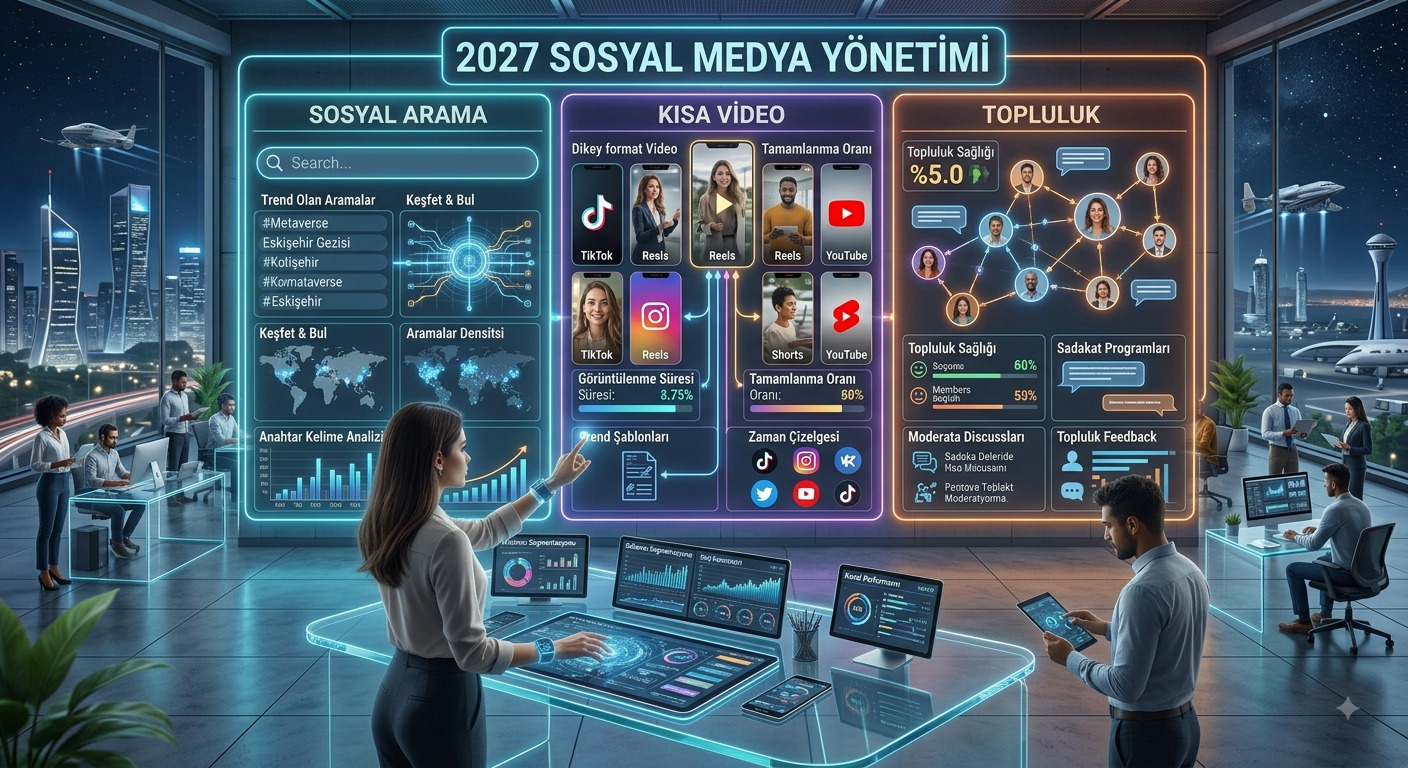
Users discover on platforms, search, ask questions in comments, get to know products through short videos and observe brand behavior before purchase. For this reason, social media should be treated as a working system where content production, customer communication, reputation and measurement come together.
The framework below describes preparation steps based on usage patterns that are strengthening today, not on trends confirmed for 2027.
Key Takeaways
- Produce social content based on real user questions, not only on the algorithm.
- In short video, success depends more on a repeatable production system than on a single viral idea.
- Comments and messages are a source of customer service and insight.
- Read follower counts together with reach, view quality, saves, clicks and qualified inquiries.
- For SMEs, a sustainable, measurable and reusable calendar is more valuable.
How Are Social Platforms Used Like Search Engines?
Users may use in-platform search for questions such as “which machine manufacturer?”, “how is the product used?” or “who provides this service in Eskişehir?” This trend increases the need for descriptive headings, conversational phrasing, location information and correct tagging in content. However, instead of stuffing keywords, the video or image must actually answer the question.
For manufacturers, application videos, quality control processes, material selection and maintenance tips; and for SMEs, short explanations showing how the service proceeds, can become meaningful search assets. Meta’s advertising and content resources for businesses recommend evaluating different formats and objectives by platform [1].
Building a Short-Video Production System
A short-video strategy should not begin with the pressure of “a new idea every day.” First choose five content pillars: problem and solution, the product’s area of use, team and production, customer questions, brand culture. For each pillar, define three formats: expert explanation, process footage and short video with text overlay.
From one long shoot, you can produce a vertical short clip, a Q&A excerpt, a captioned quote and an explanatory section for the website. This way a single shoot can be used across more channels. TikTok’s Creative Center resources also offer practical guides that take hook, format, sound and community context into account in creative production [2]. Instead of copying every current platform feature, choose a production rhythm that suits the brand.
Comment and Community Management
Comments are not secondary text left under a post; they are user research. Which questions keep repeating? Which objections slow down the purchase decision? Which expressions lead to misunderstandings? These questions should be brought to the monthly content meeting.
A simple classification can be used in the response flow: information request, price/quote, technical support, satisfaction, complaint and crisis risk. Information requests can be answered openly; personal or commercial details can be moved to a private message. For complaints, instead of defensive language, state that you understand the situation, through which channel you will help and what needs to be verified. The crisis flow should be defined in advance, and unauthorized employees should be prevented from making definitive statements.
Measuring Content Performance
First define the purpose of each piece of content. For awareness content, reach and view quality; for consideration content, saves, shares and profile visits; for demand content, link clicks, forms and messages may be more meaningful. Follower growth alone is not a business result.
In-platform metrics may change over time. For this reason, keep a fixed core in the monthly report: number of posts, reach, views, types of engagement, profile/link clicks, incoming messages and qualified inquiries. Read organic and paid results separately. Each month, write down why the best three pieces of content worked and what the weakest three taught.
A Workable Calendar for SMEs
Two or three main pieces of content per week may be enough for small teams; what matters is consistency. At the start of the month, list audience questions and the campaign/production calendar. One day can be set aside for scripting and shooting, one for editing and design, and a short day each week for community replies. Having at least two weeks of drafts in the content pool reduces last-minute low quality.
When manufacturers use shop-floor and factory footage, they should check safety, confidentiality and employee permissions. Technical information can be simplified; however, exaggerated performance promises or unverifiable customer results should not be used. Aves Dijital’s social media management service page is the relevant link for evaluating strategy, content calendar, visual/video production, community management and reporting processes together.
Is it necessary to be on every platform in 2027?
No. It is more sustainable to choose the platforms where the target audience is active and the business can produce regular, high-quality content.
Do short videos bring sales?
They can; however, a video alone is not a sales funnel. Description, profile information, link, response flow and follow-up process should be set up together.
How often should a social media report be prepared?
A monthly report is a sufficient rhythm for making decisions. For important campaigns, a weekly interim check can be made.